Skip to content
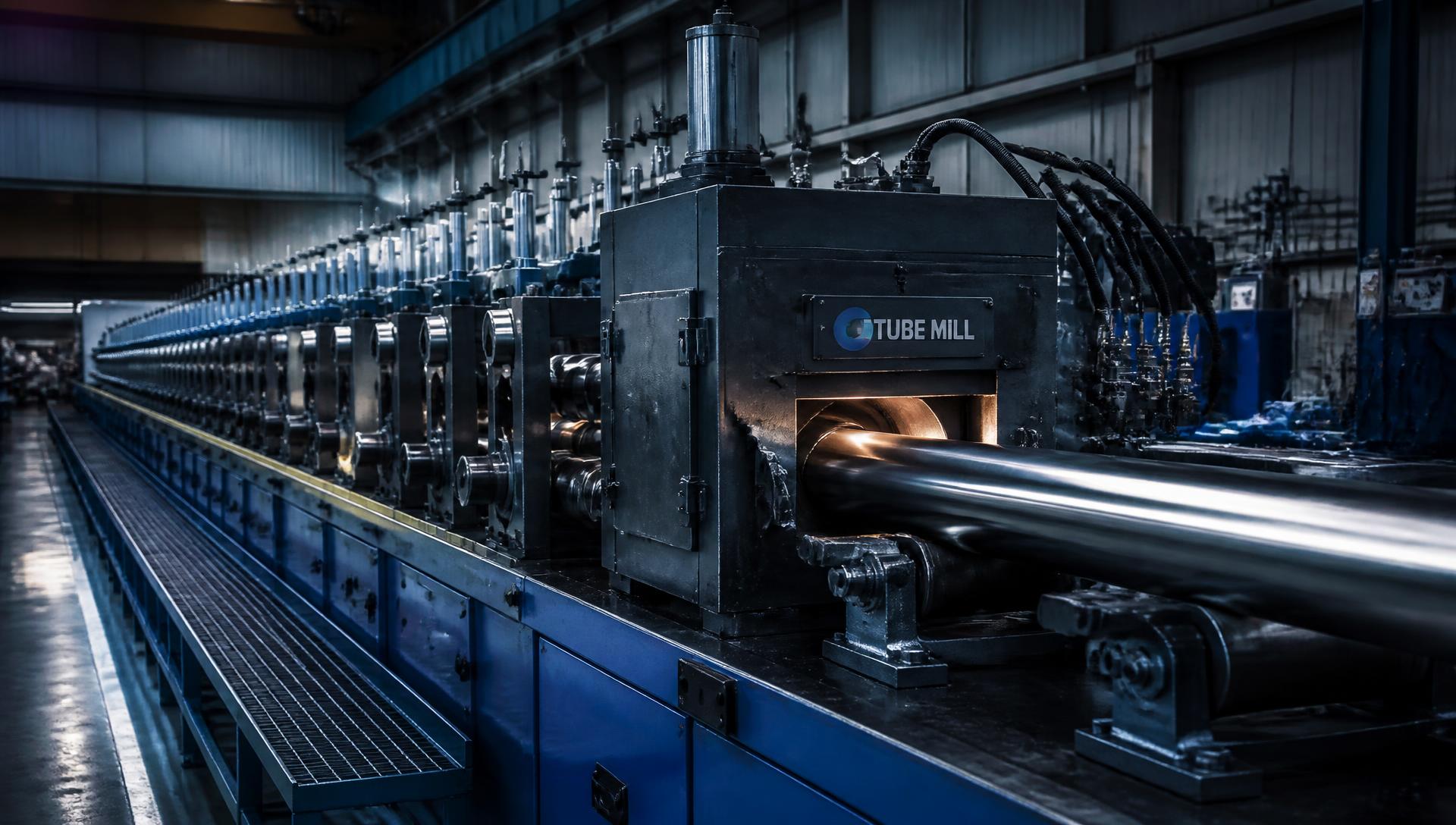
Steel tube exiting the weld box of a modern roll-forming tube mill line

Tube Mill Engineering & Alignment Specialists

Precision Where It Matters Most.

Tube Mill Engineering, Alignment & Process Consulting

When a tube mill isn't performing correctly, the cause isn't always obvious. Baker Mill Consulting helps tube and pipe manufacturers identify alignment, setup, equipment, and process issues that affect quality, throughput, reliability, and production.

Based in Indiana. Supporting manufacturers nationwide.

The mill is a system

Small Misalignments Create Big Problems.

Tube and pipe mills are interconnected systems. A condition in alignment, setup, tooling, equipment geometry, or process can show up several stations away from where it originates — which is why the same adjustment keeps getting made without the problem ever going away.

Tube mill — process line

Common centerline

  1. Entry

    Uncoiler · Accumulator

  2. Forming

    Breakdown · Fin pass

  3. Welding

    Weld box · Scarf

  4. Sizing

    Sizing stands

  5. Straightening

    Turks head

  6. Cutoff

    Cutoff · Runout

Symptoms commonly reported

  • Tube twist
  • Tracking problems
  • Dimensional inconsistency
  • Poor weld conditions
  • Excessive tooling wear
  • Surface defects
  • Vibration
  • Premature equipment wear
  • Difficult setups
  • Reduced line speed
  • Excess scrap
  • Unexplained production problems

The symptom isn't always where the problem starts.

Scott approaches the mill as a complete system rather than treating each machine independently. Forming, welding, sizing, straightening, and cutoff all share the same material — and the same geometry. Evaluating them in isolation is how problems survive for years.

Capabilities

Specialized Tube Mill Expertise

Engineering support focused on one industry: welded tube and pipe production.
01

Mill Alignment

Precision evaluation of mill geometry, centerlines, pass lines, equipment relationships, and alignment conditions throughout the manufacturing process.

  • Mill centerline
  • Pass-line relationships
  • Roll stands
  • Shafts
  • Forming sections
  • Weld sections
  • Sizing sections
  • Straighteners
  • Downstream equipment

Preliminary description. Specific methodology, tolerances, measurement technology, and certifications to be supplied by Scott.

02

Mill Troubleshooting

Help diagnosing difficult production problems when the source of the issue isn't obvious from the symptom.

  • Tube tracking
  • Twist
  • Dimensional variation
  • Forming problems
  • Weld-related process issues
  • Tooling wear
  • Surface quality problems
  • Equipment vibration
  • Repeated setup problems
  • Unexplained scrap
03

Process Optimization

Evaluation of how equipment, tooling, setup, operating practices, and production requirements interact — and where performance is being lost.

  • Throughput
  • Consistency
  • Quality
  • Reliability
  • Setup time
  • Equipment life
  • Scrap rates
04

Mill Setup & Commissioning Support

Engineering support through equipment changes, when decisions made early determine how the line runs for years.

  • New equipment
  • Reconfigured mills
  • Equipment relocation
  • Mill upgrades
  • New tooling
  • Process changes
  • Startups
  • Commissioning
05

Remote Engineering Support

Put decades of tube mill experience on your problem—wherever your mill is located. Scott works from customer-provided information to evaluate the mill without automatically requiring a site visit.

  • Measurements
  • Drawings
  • Equipment layouts
  • Tooling information
  • Production data
  • Photos
  • Video
  • Operating conditions
  • Problem descriptions

Not every problem can be resolved remotely. Some issues require direct measurement or observation on the floor.

06

On-Site Consulting

For situations requiring direct observation, measurement, evaluation, commissioning, or hands-on collaboration with your team, on-site consulting can be arranged.

  • Direct observation of the running line
  • On-site measurement and evaluation
  • Commissioning and startup support
  • Working sessions with engineering and maintenance

Alignment

Alignment Is More Than Level.

Scroll to see a misaligned line settle onto a common centerline.

Alignment study — schematic

Deviation 1.00 → correcting

MILL CENTERLINECENTERLINEΔ 26.0PASS LINEΔ 18.0DATUMΔ 22.0PARALLELISMΔ 24.0EQUIPMENT RELATIONSHIPΔ 14.0

Schematic illustration only — not a representation of a specific measurement method.

Level ≠ positioned

A machine can appear level and still be incorrectly positioned relative to the rest of the process.

A system, not machines

Proper mill alignment considers how the equipment works together as a system.

Errors compound

Small geometric errors can compound as material moves through the line.

Measure the system. Understand the process. Correct the cause.

Troubleshooting

Stop Chasing Symptoms.Find the Cause.

Tube mill problems often result in repeated adjustments to tooling or equipment without ever identifying the underlying issue. Compensation becomes the standard operating procedure, and the real condition stays in the line.

Scott combines engineering analysis with real-world manufacturing experience to help teams understand what their mill is actually doing—and why.

Discuss a Mill Problem

Diagnostic sequence

  1. 01

    Production Problem

    What the line is actually doing.

  2. 02

    Observe

    Watch the mill run under real conditions.

  3. 03

    Measure

    Capture geometry, setup, and process data.

  4. 04

    Analyze

    Relate the measurements to the symptom.

  5. 05

    Identify Root Cause

    Separate cause from consequence.

  6. 06

    Correct

    Change the condition, not the compensation.

  7. 07

    Verify

    Confirm the correction holds in production.

Remote consulting

Tube Mill Expertise. Wherever Your Mill Is.

Not every problem requires putting an engineer on an airplane.Remote consulting allows manufacturers to quickly bring specialized tube mill expertise into a troubleshooting or engineering problem. Some work — measurement, commissioning, physical evaluation — still requires being on the floor.
  1. 01

    Describe the Problem

    Tell Scott what the mill is doing, what changed, and what you've already tried.

  2. 02

    Gather the Data

    Scott identifies the measurements, drawings, photos, videos, operating information, or other information needed to evaluate the problem.

  3. 03

    Analyze

    The mill, equipment relationships, setup, and process conditions are evaluated.

  4. 04

    Develop a Plan

    Receive recommended checks, measurements, adjustments, or next steps.

  5. 05

    Verify

    Review the results and determine whether additional changes or on-site support are necessary.

Placeholder portrait of Scott Baker, consulting engineer, in a tube mill plant
Photo placeholder

Experience

Engineering Knowledge Built on Manufacturing Experience.

Scott Baker is an engineer with extensive hands-on experience in tube and pipe manufacturing, including senior manufacturing leadership responsibilities. His background includes time at Consolidated Metals Inc. He now consults independently from Indiana.

Years of experience

[ADD YEARS]

Engineering degree

[ADD DEGREE]

University

[ADD UNIVERSITY]

Certifications

[ADD CERTIFICATIONS]

Prior title

[ADD TITLE]

Notable projects

[ADD PROJECTS]

Editable — to be supplied by Scott
“The goal isn't to keep adjusting the mill. It's to understand why the mill needs adjusting.”

Placeholder copy — pending Scott's approval

Who we help

Built for Tube & Pipe Manufacturers

Support is focused on welded tube and pipe production and roll-formed products.
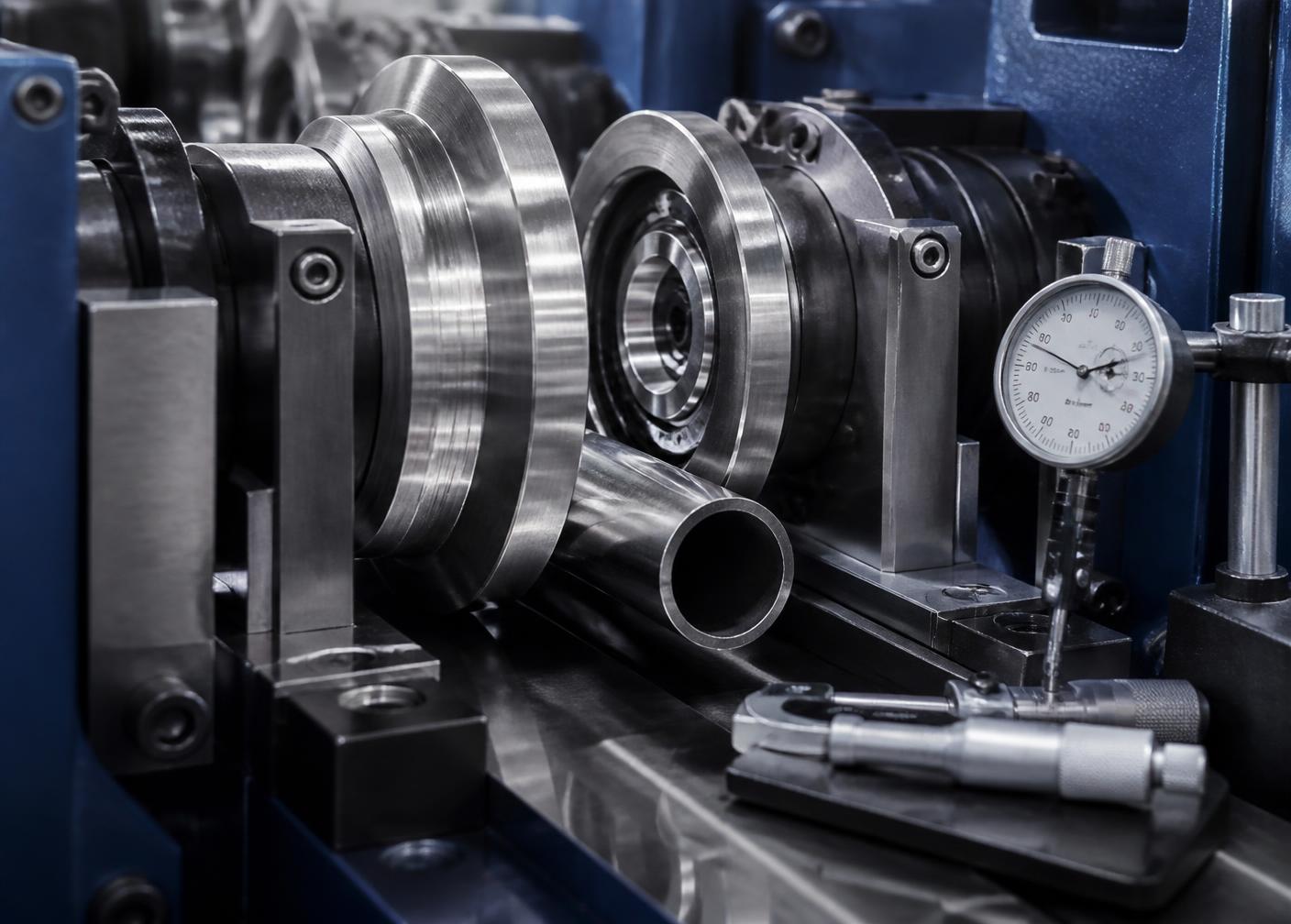
Precision roll tooling in a tube mill stand with a dial indicator and micrometer

Products

  • Carbon steel tubing
  • Stainless tubing
  • Mechanical tubing
  • Structural tubing
  • Precision tubing
  • Welded tube and pipe
  • Roll-formed products

Industries served

Editable list — include only the end markets Scott confirms he supports.

  • Automotive
  • Construction
  • Furniture
  • HVAC
  • Energy
  • Agricultural equipment
  • Material handling
  • OEM manufacturing

Editable area — confirm before publishing

Fit

When Should You Call Scott?

  • 01

    Your mill suddenly isn't running like it used to.

  • 02

    You're fighting the same quality problem repeatedly.

  • 03

    The tube tracks differently from one setup to another.

  • 04

    You're experiencing excessive tooling or equipment wear.

  • 05

    You're installing or relocating mill equipment.

  • 06

    You're struggling to hold dimensional tolerances.

  • 07

    Your team keeps making adjustments but the problem keeps returning.

  • 08

    You're considering a mill upgrade and want an experienced engineering perspective.

  • 09

    You need a second opinion before making an expensive equipment decision.

  • 10

    You have a problem your normal vendors haven't been able to solve.

You don't necessarily need another piece of equipment. You may need another perspective.

Case studies

Problem. Investigation. Root Cause. Result.

Structured examples of how a mill problem is worked. The entries below are placeholders — no figures are published until they are verified with the customer.
AlignmentExample

Example Case Study — Replace With Actual Project

Problem
[Placeholder] Describe what the mill was doing: the defect, when it appeared, and how it affected production.
Investigation
[Placeholder] Describe what Scott evaluated — equipment relationships, geometry, setup, tooling, process conditions.
Root Cause
[Placeholder] Describe what was actually causing the problem, versus what was being adjusted.
Solution
[Placeholder] Describe what changed.
Result
[Placeholder] Describe the measurable improvement. Metrics to be supplied by Scott — no figures are shown until verified.
TroubleshootingExample

Example Case Study — Replace With Actual Project

Problem
[Placeholder] Recurring quality issue that returned after every setup.
Investigation
[Placeholder] Data reviewed, measurements requested, observations made.
Root Cause
[Placeholder] Underlying condition identified upstream of the symptom.
Solution
[Placeholder] Corrective action and verification method.
Result
[Placeholder] Improvement category only — e.g. scrap reduction, line speed, dimensional consistency, downtime, tooling life, weld consistency, setup time.
CommissioningExample

Example Case Study — Replace With Actual Project

Problem
[Placeholder] New or relocated equipment not producing to expectation at startup.
Investigation
[Placeholder] Layout, foundations, equipment relationships, and process settings reviewed.
Root Cause
[Placeholder] Root condition found during commissioning.
Solution
[Placeholder] Adjustments and sequence of corrections.
Result
[Placeholder] Result to be documented with the customer's permission.

Insights

Technical Notes on Tube Mill Behavior

Short technical articles on alignment, forming, and troubleshooting. Titles below are planned topics.
  • Alignment

    Why Tube Mill Alignment Is More Than Leveling Equipment

    Level is one condition among many. Alignment is about how each piece of equipment relates to the centerline and pass line of the entire process.

  • Troubleshooting

    The Difference Between a Mill Problem and a Tooling Problem

    Tooling gets replaced long before anyone questions the machine holding it. How to tell which one you're actually fighting.

  • Forming

    Why Tube Twist Isn't Always a Roll Tooling Problem

    Twist is a symptom with several possible origins across forming, welding, sizing, and straightening.

  • Alignment

    Understanding Centerline and Pass-Line Relationships

    The two geometric references that everything else in the mill is measured against.

  • Maintenance

    When Should a Tube Mill Be Realigned?

    Triggers worth watching for, and what changes in a mill's behavior before geometry is questioned.

  • Troubleshooting

    Five Measurements to Check Before Blaming the Tooling

    A short list of checks that frequently redirects a troubleshooting effort.

Next step

Have a mill problem? Let's look at it.

Remote consultations available nationwide. On-site support available when required.